ISCM 2011 World new music days – dutch section selection

The dutch section of the ISCM organisation, has announced there national selection of dutch composers to be submidded for the ISCM 2011 world new music days. ‘Bioluminescence’, an electroacoustic composition by Augusto Meijer is one of six composers selected for submission. Unfortunately, Bioluminescence didn’t make it to the final International selection.

excerpt of ‘Bioluminescence’: click here

Composers selected by the dutch ISCM section:

Juan Felipe Waller (1971)                             Plato-Plastic Dialogues for percussion ensemble and electronics. (2010, 12’)

www.felipewaller.com

Marcel Wierckx (1970)                                  ZinTuig, for electric guitar and multimedia (2009, 5’30”)

www.lownorth.nl/

Bart Spaan (1963)                                            Sur place: interior, electronic music (2010, 9’32”);

www.xs4all.nl/~bspaan

Augusto Meijer (1988)                                    Bioluminescence, electronic music (2010, 14’)

https://augustomeijer.wordpress.com/

Peter Bosch/Simone Simons (1958)            Bang Spring Time Sound sculpture

www.boschsimons.com

About ISCM

The International Society for Contemporary Music (ISCM) is an important international network of members from around fifty countries, devoted to the promotion and presentation of contemporary music – the music of our time. ISCM has had a distinguished history. From its foundation in Salzburg in 1922, a receptiveness to aesthetic and stylistic diversity has been a characteristic of the Society. Today more than ever with the incredible diversity which exists in contemporary musical expression around the world, this ideal is still strongly supported by ISCM members.

Each year, ISCM presents the <!– –>World Music Days Festival<!– –> , hosted by one of ISCM’s members, which provides a feast of contemporary music across a broad range of contemporary practice. The host nation has some flexibility in determining the individual themes that drive the programming of the Festival, either presenting a showcase of activity from around the world, or applying other criteria for the selection and programming of works.

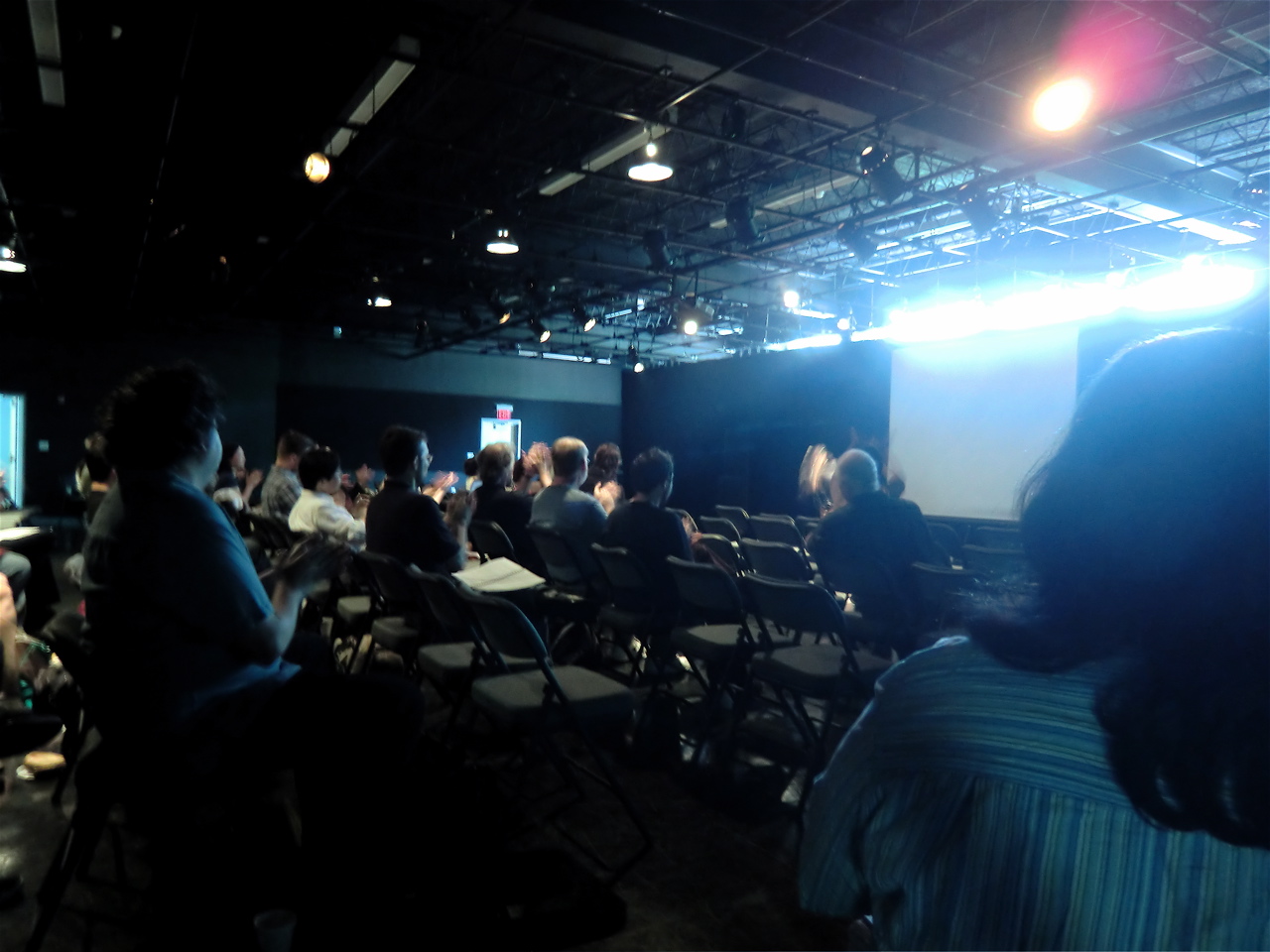
Landschappen @ ICMC 2010

‘Landschappen’, a 17 minute electroacoustic piece, was accepted for programming at the International Computer Music Conference 2010, in New York. The piece was played on june 4th 2010, Tabler theatre Stony Brook University.

Listen to Bioluminescence & Landschappen @ “230 volt” 01/31/2011, de Concertzender

about ICMC:

The ICMC is the preeminent annual gathering for computer music practitioners from around the world and its unique interweaving of professional paper presentations and concerts of new computer music, refereed by ICMA- approved international panels, creates a vital synthesis of science, technology and the art of music.

For more information, visit http://www.icmc2010.org/index.html and http://www.computermusic.org/page/23/

E-live 2010

The E-live concert is part of a festival for New Music.
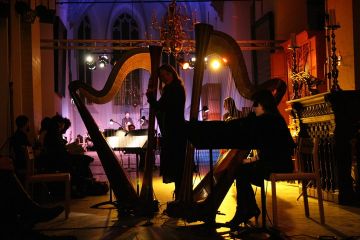
Performers and musicians/composers from the Utrecht school of the Arts, performed their pieces in this beautiful location:

The Nicolaïkerk (St. Nicholas church) is a medieval church in the southern part of the old city of Utrecht in the Netherlands. This building is the home of two very interesting instruments, the organ built by Marcussen and the carillon built by the famous Hemony brothers (17th century). These instruments are the backbone for a series of concerts, which are organised each year by the Stichting Culturele Evenementen Nicolaïkerk (Foundation for Cultural Events in the Nicolaïkerk ).

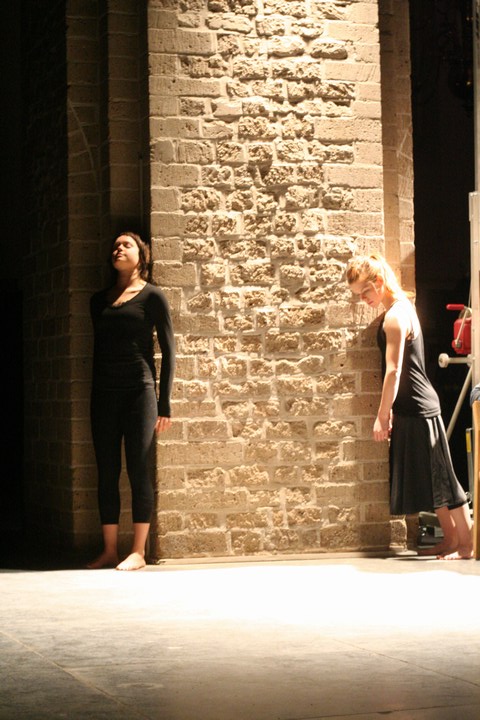
'Landschappen' with Sara Licher & Arianna Cattini

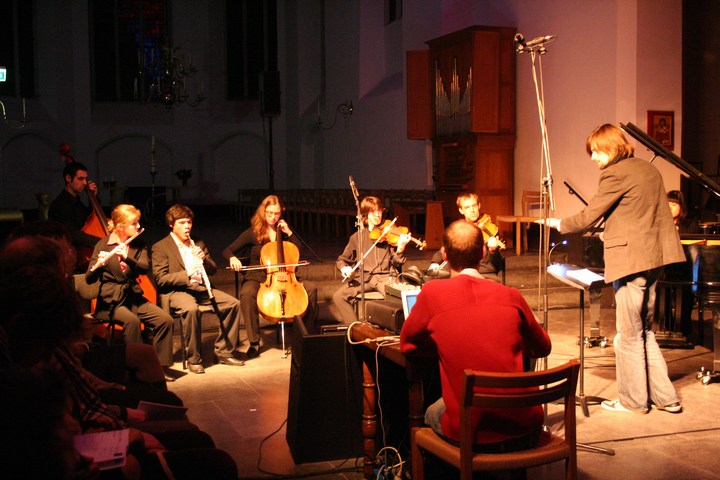
'Consensual science'

Augusto’s piece ‘Landschappen’ was performed at this concert, which involved a modern dance improvisation.
Collaboration with:  Sara Licher, Arianna Cattini, Wim h. De Vries.
Also, he collaborated with Arjan de Wit and Michael Dzjaparidze for a second e-live performance.
Together they did an experiment with software programming and classical instruments. Augusto was involved in the composing process.
The end result is ‘Concensual science’.